

PICK A DESTINATION HERE

The Philippines is a vast tropical archipelago of more than 7,600 islands located in Southeast Asia between the South China Sea and the Pacific Ocean. Its geography of volcanic islands, limestone formations, mangrove forests, seagrass beds, and coral reef systems creates one of the most biologically diverse marine environments on Earth. The Philippines forms a central part of the Coral Triangle, often known as the “Amazon of the Seas,” which contains the highest concentration of coral reef biodiversity in the world. This extraordinary marine richness makes the country one of the most important global regions for coral reef research, marine conservation, ecological rehabilitation, and scientific discovery. The Philippines is also one of the countries where ORR are actively involved in educating local communities, divers, and conservation participants on the protection, understanding, and long-term conservation of coral reef ecosystems.
The Philippines is an archipelagic nation in Southeast Asia, made up of more than 7,600 islands scattered across the western Pacific Ocean. Bordered by the South China Sea to the west and the Philippine Sea to the east, its geography is defined by a striking diversity of landscapes from volcanic mountains, dense rainforests, fertile plains, and some of the world’s most extensive coastlines. This fragmented geography has shaped not only its ecosystems but also the identities of its regions, with Luzon, Visayas, and Mindanao forming the country’s three main island groups.
The Filipino people are known for their warmth, resilience, and strong sense of community. With a population drawn from a blend of Austronesian roots and centuries of cultural exchange through trade and colonization, the society reflects influences from indigenous traditions as well as Spanish, American, Chinese, and Malay heritage. Family plays a central role in daily life, and social bonds are deeply valued, often expressed through hospitality and communal gatherings.
Culturally, the Philippines is vibrant and expressive, marked by colorful festivals, music, dance, and a deep connection to both faith and tradition. Celebrations such as Sinulog and Ati-Atihan highlight a fusion of indigenous beliefs and Catholic practices, a legacy of over three centuries of Spanish rule. Art, cuisine, and storytelling further reveal a culture that is both rooted in history and constantly evolving.
Linguistically, the country is remarkably diverse, with over 180 languages spoken across the islands. Filipino, based largely on Tagalog, and English serve as the official languages and are widely used in education, government, and media. Regional languages such as Cebuano, Ilocano, and Hiligaynon remain vital to local identity, reflecting the archipelago’s rich tapestry of cultures and histories. Together, the Philippines presents a dynamic portrait of a nation shaped by its geography, where diversity is not just a feature, but the essence of its identity.

APO ISLAND
Off the southeastern coast of Negros Island in the Philippines, Apo Island rises from the Bohol Sea as a small volcanic island, no more than 12 hectares in size, yet globally significant in both ecological and conservation terms. Its rugged coastline is shaped by ancient lava flows, with steep rocky shores giving way to narrow beaches and fringing coral reefs that encircle much of the island. Located just off the mainland municipality of Dauin, Apo’s geographic position places it within the heart of the Coral Triangle, the most biologically diverse marine region on Earth.
Beneath its waters lies an extraordinary concentration of marine life. Apo Island is renowned for its thriving coral reef systems, where hard and soft corals form dense, structurally complex habitats that support hundreds of species of reef fish, from schooling fusiliers and jacks to cryptic macro life hidden within crevices. The reefs are also home to charismatic megafauna such as green sea turtles, which are frequently encountered grazing on seagrass beds, as well as occasional reef sharks and pelagic visitors passing along the island’s drop-offs. This biodiversity is not incidental. It is the result of decades of community-led marine protection, making Apo Island one of the earliest and most successful examples of a marine sanctuary in the Philippines.
What distinguishes Apo Island is not only the richness of its ecosystems but the balance between human presence and ecological integrity. The island’s surrounding marine reserve has allowed coral cover to recover and fish biomass to flourish, creating a living model of how small-scale coastal communities can safeguard biodiversity while sustaining their livelihoods. Today, Apo Island stands as both a natural treasure and a benchmark in marine conservation, where geography, biology, and stewardship converge in one of the most celebrated reef systems in the world.


What sets Apo Island apart is not just the richness of its reefs, but the way those reefs have been protected. Quietly, locally, and effectively for decades. Established in the early 1980s with guidance from scientists of Silliman University, the island’s marine sanctuary became one of the first community-managed Marine Protected Areas (MPAs) in the Philippines. At a time when blast fishing and destructive practices were widespread, Apo’s fishermen made a deliberate decision: to set aside a portion of their reef as a no-take zone, allowing nature to recover on its own terms.
The structure of the MPA is deceptively simple. A clearly defined sanctuary area and fully protected from fishing. The sanctuary sits alongside surrounding waters where regulated, traditional fishing is still allowed. This zoning creates a powerful ecological effect. Inside the sanctuary, fish populations grow larger, live longer, and reproduce more successfully. Over time, this leads to what scientists call a “spillover effect,” where adult fish migrate beyond the protected boundary and replenish adjacent fishing grounds. For the local community, conservation did not replace livelihood, it strengthened it.
Ecologically, the results have been profound. Coral cover within the sanctuary has remained high and resilient, even as many reefs across the region declined. Fish biomass has increased dramatically, with dense schools now a common sight, and key species like groupers, snappers, and herbivores has reestablishing their ecological roles. The reef structure itself has regained complexity, supporting not just fish but invertebrates, turtles, and transient pelagic species. Apo Island became living proof that protection, when enforced and respected, allows reef systems to rebuild their natural balance without artificial intervention.
Equally important is the governance behind it. The success of Apo Island’s MPA is rooted in community ownership. Local residents enforce the rules, manage tourism activities, and directly benefit from the reef’s recovery through improved fisheries and ecotourism. This sense of stewardship transformed conservation from an external imposition into a shared responsibility. It is why Apo has endured while many top-down protected areas have struggled.
Today, Apo Island is often cited as a global benchmark for small-scale marine conservation. Not because it relies on large funding or complex infrastructure, but because it demonstrates a fundamental principle: when communities understand the ecological value of their environment and are given the authority to protect it, recovery is not only possible, it is inevitable.

A reef panorama is the only honest way to comprehend Apo Island. Not as a collection of dive sites, but as a continuous, living architecture that stretches beyond the limits of a single glance. As the view widens, the reef reveals its true scale: an unbroken expanse of hard and soft corals layered in density, each colony pressing into the next, forming a textured landscape that feels more terrestrial than marine. There is no emptiness here, no sterile gaps—only a saturation of life, where every contour is occupied, every surface claimed. Schools of fish move across this canvas like shifting shadows, reinforcing the sense that the reef is not static, but breathing, pulsing, and in constant motion. In panorama, Apo does not present itself as a dive, it unfolds as a system, vast and complete, where abundance is not a feature but the defining condition.


MY MISSION
May visit to Apo Island is driven by the need to make observation on one of the iconic reef locations in the Philippines. At Apo Island, there is no need of training nor interventions. Conservation at the time of my visit it best kept to observation and learning from the reef that is at its peak and communicates with subtle signs of stress. Several established colonies of Porites that toppled is found to have weakened on their base. White powdery characteristic of the fracture is found to be weakened acidic pockets of the surrounding water. The first encounter of this phenomenon. We often believe the acidity of the seawater are diluted and uniform. Now that we discovered decomposing organisms can be source of acidic molecules that affect nearby coral colonies before dissolution occurs. Respecting the no intervention approach of this observation, no sampling is done during this observation. It was further taken to other reefs with similar conditions where a more thorough approach is take to confirm it.

Bayaca Island
Nestled within the spectacular Calamianian Archipelago of northern Palawan, Bayaca Island stands as an extraordinary living classroom for marine conservation, coral rehabilitation, and ecological field training. Surrounded by some of the most biologically significant tropical marine ecosystems in the Philippines, the island offers an ideal environment for the mission of ORR field operations. Far from the distractions of urban tourism, Bayaca Island provides an immersive experience where participants live, study, dive, and work directly within the natural systems they seek to protect.
The Calamian Islands are internationally recognized for their crystal-clear waters, limestone island formations, extensive coral reef systems, seagrass meadows, mangrove forests, and remarkable marine biodiversity. Within this environment, Bayaca Island offers a rare combination of isolation, accessibility, and ecological richness making it exceptionally suitable for hands-on coral rehabilitation training, scientific observation, conservation internships, and volunteer programs.

Unlike conventional tourism destinations, Bayaca Island represents a return to authentic field conservation. Participants are exposed to real environmental conditions, practical reef assessment methods, ecological monitoring, coral nursery development, reef rehabilitation techniques, and community-oriented marine stewardship. The island’s remote setting creates the perfect atmosphere for focused learning, teamwork, discipline, and environmental awareness. Here, the ocean becomes both the classroom and the instructor.
The surrounding waters of the Calamianes are among the most renowned diving regions in Southeast Asia. The area is famous not only for its coral reefs and marine life, but also for its World War II shipwrecks, underwater limestone formations, and protected marine habitats. This diversity of marine environments allows ORR trainees and volunteers to gain exposure to multiple reef conditions and conservation challenges within a single field location.
GETTING THERE
Reaching Bayaca Island is relatively straightforward despite its secluded atmosphere. The primary gateway is through the municipality of Coron in northern Palawan. International travelers typically arrive in the Philippines via Manila or Cebu City before taking a domestic flight to Francisco B. Reyes Airport (USU) on Busuanga Island. Multiple airlines operate regular direct flights connecting Coron with Manila, Cebu, Clark, and other regional hubs. Upon arrival at Busuanga Airport, participants travel approximately forty minutes by land transfer to Coron Town, the main operational hub of the Calamian Islands. From Coron, access to Bayaca Island is completed by boat transfer across the calm waters of the archipelago. This final stage of the journey introduces visitors to the dramatic limestone scenery, pristine coastlines, and turquoise waters that define the region.
For travelers seeking a more adventurous route, ferry connections are also available between Coron and other Palawan destinations such as El Nido and Puerto Princesa. These sea routes allow participants to experience the broader geography of Palawan while traveling through one of the most scenic marine corridors in the Philippines.
VISITING BAYACA ISLAND
Bayaca Island was selected not for luxury or convenience, but because it embodies the environmental realities essential to meaningful conservation training. The island provides direct exposure to reef ecosystems that remain vulnerable to climate change, destructive fishing, sedimentation, tourism pressure, and ecological degradation the very challenges ORR seeks to address through education, rehabilitation, and scientific engagement.
For interns and volunteers, the experience extends beyond diving and fieldwork. Life on Bayaca Island encourages self-reliance, environmental responsibility, and a deeper understanding of humanity’s relationship with the ocean. Participants become part of a living conservation effort where every dive, survey, rehabilitation task, and observation contributes to long-term reef protection and ecological knowledge.
In many ways, Bayaca Island represents the philosophy of ORR itself, conservation through immersion, education through experience, and rehabilitation through understanding. Here, students, divers, researchers, and volunteers do not simply learn about coral reefs. They live beside them, work within them, and become active participants in their protection for future generations.
Bayaca Island Dive Camp
Bayaca Island Dive Camp was established to support not only recreational diving, but also marine conservation training, coral rehabilitation initiatives, internships, and scientific field activities conducted in partnership with ORR programs. The camp provides a rare opportunity for divers to experience authentic island living while participating in hands-on environmental engagement within living reef ecosystems.
As a fully equipped diving outfit, Bayaca Island Dive Camp is capable of supporting both beginner and advanced divers through a comprehensive range of professional dive services and training facilities. Modern scuba equipment, compressors, cylinders, dive boats, safety systems, and field support infrastructure are maintained to ensure safe and efficient diving operations in the remote island environment. The camp is designed to accommodate not only leisure divers, but also students, conservation volunteers, underwater observers, and long-term field trainees.

One of the major strengths of the camp is the availability of internationally recognized SDI scuba diving courses. Through the Scuba Diving International (SDI) system, participants may begin their journey as entry-level divers or continue advancing toward higher professional certifications. Training programs are conducted within the extraordinary natural conditions of the Calamianes, allowing students to develop real-world diving competence in open ocean environments rather than confined tourist settings.
From Open Water Diver certification to advanced specialties, rescue training, navigation, buoyancy control, and ecological diving awareness, the courses at Bayaca Island Dive Camp emphasize practical skill development, environmental responsibility, and diver confidence. Students are trained not merely to dive, but to understand and respect the marine ecosystems they enter. This educational philosophy aligns closely with the conservation principles promoted through ORR initiatives.
What distinguishes Bayaca Island Dive Camp from conventional dive resorts is its atmosphere of purpose and immersion. Here, divers wake up surrounded by the sea, participate in field activities, study reef ecosystems directly in nature, and become part of an active conservation environment. The experience extends beyond certification cards and recreational excursions. It becomes an opportunity to develop a genuine connection with the ocean and an understanding of the responsibilities that come with entering fragile marine ecosystems.
The surrounding waters of Bayaca Island provide exceptional conditions for training and exploration. Calm lagoons, coral gardens, reef slopes, underwater walls, seagrass habitats, and nearby historical wreck sites create a dynamic underwater classroom suitable for all levels of diving experience. Visibility is often excellent, marine life is abundant, and each dive offers new opportunities for observation and discovery.
Bayaca Island Dive Camp ultimately represents a different philosophy of diving, one where exploration is combined with education, recreation is connected to responsibility, and every descent beneath the surface becomes part of a larger mission to understand and protect the ocean. In this remote corner of northern Palawan, diving is not simply an activity. It is a pathway toward awareness, stewardship, and meaningful engagement with the marine world.
NEW DISCOVERIES
The waters surrounding Bayaca Island remain one of the least explored marine environments within the Calamianian Archipelago, and ongoing field observations continue to reveal the extraordinary biological richness of the area. Recent discoveries of several potentially new coral species have highlighted the island’s importance as an emerging site for marine scientific research and biodiversity studies. These findings suggest that many reef organisms within the region may still remain undocumented, concealed within the complex reef structures, deeper slopes, and isolated marine habitats surrounding the island. For researchers, interns, and conservation volunteers, Bayaca Island offers a rare opportunity to work within a living frontier of marine exploration, where each survey dive carries the possibility of contributing to new scientific understanding and the discovery of species previously unknown to science.

MY MISSION
My mission in Bayaca Island is more holistic as compared to all other locations in the Philippines. This is due to the receptiveness of my host, suitable working environment and plenty of room for development. Here, I am able to extend further the organic reef rehabilitation strategies.
Bayaca Island is also the venue for expansion of the educational programs. This is the reason Bayaca Island is home to the Coral Reef Ecology Diver Extension course or CRED-X. Here, newly certified open water divers can extend their training into understanding the coral reef ecology. Student take home knowledge of coral ecology right from the start of their diving journey. It is a significant accomplishment comparing to other open water diver who are ecologically blind from the start.


BALICASAG ISLAND
Balicasag Island is a small, circular coral island located off the southwest coast of Panglao in Bohol, Philippines, surrounded by some of the most vibrant and well-protected reefs in the region. Rising gently from the Bohol Sea, the island is fringed by white sand beaches and a narrow band of vegetation, beyond which the seabed drops dramatically into deep walls teeming with marine life.
Renowned as a marine sanctuary, Balicasag is a haven for divers and snorkelers, where thriving coral gardens, schools of jackfish, sea turtles, and occasional reef sharks are common sights. The island’s isolation and protected status have allowed its ecosystems to flourish, making it a model of how community-led conservation and regulated tourism can sustain both livelihoods and biodiversity.
Home to a small local community, life on Balicasag remains closely tied to the sea. Fishing, guiding, and eco-tourism form the backbone of the island’s economy, with residents playing an active role in safeguarding their marine environment. Simple, unhurried, and deeply connected to nature, Balicasag offers a glimpse of the Philippines at its most pristine, where the rhythm of life follows the tides, and the reef remains at the heart of it all.


VISITING BALICASAG ISLAND
A good Balicasag trip is really about timing and restraint. Most people try to squeeze dolphins, snorkeling, Virgin Island, lunch, and diving into one rushed island-hopping package. That’s how you end up surrounded by boats, queues, and fin-kicking chaos. Balicasag is much better experienced slowly and early.
Here’s the structure that tends to work best for divers and serious ocean travelers.

The Best Base: Stay in Panglao. Most departures leave from Panglao Island, especially around Alona Beach. Stay at least 3 nights in Panglao instead of attempting Balicasag as a same-day transit stop from Cebu. The weather, sea state, and permit system all reward flexibility.Because Balicasag now operates under strict conservation controls, diver permits are capped at around 150 divers daily, with advance reservations increasingly necessary.
Leave before the island-hopping crowds. This matters more than people realize.The big tourist boats usually begin arriving around mid-morning. By 9–11 AM, the sanctuary mooring area can become crowded with snorkel tours and waiting lines for guides.
A serious dive operator will aim to have you entering the water by 7 AM or earlier. Some reliable operators with established Balicasag logistics include:
-
Big Blue Divers
-
BoholHaka Dive Center
-
French Touch Diving
-
Bohol Divers Club Dive Center
-
Seaquest Dive Center
These operators regularly handle permit bookings and early departures.
How to Avoid the Crowds
This is the real difference between a magical Balicasag day and a disappointing one.
-
Avoid island-hopping combo toursThe cheap “Balicasag + Virgin Island + dolphin watching” packages are efficient, but they compress too many people into narrow time windows.
-
Dive weekdays if possibleTuesday to Thursday are noticeably calmer outside holiday periods.
-
Book permits earlySome operators report needing diver certifications in advance to secure slots because quotas are tightly managed.
-
Stay overnight on Balicasag only if you truly want quiet, There is limited accommodation on the island itself, including Balicasag Island Dive Resort. Staying overnight gives you access to sunset, dawn, and the island after day visitors leave, arguably the most beautiful version of Balicasag. But accommodations are simple. Go for atmosphere, not luxury.
-
Skip dolphin-chasing tours. This may be unpopular advice, but many dolphin tours operate like marine traffic jams at sunrise. If your priority is the reef itself, you lose nothing by skipping this.
Best Time of Year
Balicasag is diveable year-round, but conditions are usually best from:
-
February to June for calmer seas and visibility
-
July to October can still be excellent but wetter
-
Peak holiday periods become significantly busier
The Best Balicasag Experience, Honestly
The strongest Balicasag memories usually happen underwater during quiet moments:
-
A turtle feeding unconcerned beside you
-
Barracuda hanging in blue water
-
Sunlight crossing the wall at 20 meters
-
The silence after the snorkel boats leave
The island is still extraordinary, but it rewards people who approach it more like a marine sanctuary than a checklist destination.
MY MISSION
Balicasag Island presents a unique opportunity for studies on impact on mass tourism on the coral reef ecosystem. Balicasag also presents an ideal ecosystem that can sustain the daily exposure to human activity. Here, most coral structures are too deep for snorkelers. The extensive seagrass meadow is the key on buffering the input of chemicals worn by visitors. My mission here is just observing the chemistry and it is the only site I found the environment is impervious of the tourism exposure.

BAUAN DIVERS SANCTUARY
Tucked along the rugged coastline of Bauan, within the greater diving region of Anilao, Bauan Divers Sanctuary stands as a quiet testament to what a reef can become when protection is intentional and consistent. This small but thriving marine refuge is not defined by size, but by density of life, of structure, and of resilience. Hard corals form layered architectures across the substrate, soft corals sway in the current, and the reef pulses with an uninterrupted flow of reef fish that have long reclaimed the area as their own.
Unlike heavily trafficked dive sites, Bauan Divers Sanctuary carries a sense of restraint. The absence of pressure has allowed natural processes to dominate, creating a reef system that feels balanced rather than curated. It is a place where ecological relationships are visible at every scale from grazing herbivores maintaining coral health, to predators moving along the reef edge with quiet authority. For divers, the experience is less about spectacle and more about immersion into a functioning ecosystem.
What makes Bauan particularly compelling is how it reflects the broader narrative of reef recovery in the Philippines. Within the waters of Philippines, a global center of marine biodiversity, sites like this demonstrate that protection, when respected, does not just preserve reefs; it allows them to rebuild complexity. Bauan Divers Sanctuary is not just a dive site, but a living reference point and an understated, yet powerful reminder of what reefs are capable of when left to exist on their own terms.


MACRO DIVERSITY
Macro diversity reveals a different scale of the reef. One that is often overlooked, yet infinitely more intricate than the sweeping coral landscapes that first capture attention. It exists in the margins: within crevices, along the underside of coral plates, buried in sand patches, or disguised among algae and hydroids. Here, life does not rely on size or dominance, but on specialization, adaptation, and precision.
In places like Bauan Divers Sanctuary within the greater Anilao region, macro diversity reaches an extraordinary level. The reef becomes a mosaic of microhabitats, each hosting species that are highly adapted to their immediate surroundings. Nudibranchs display vivid coloration not as decoration, but as chemical warnings. Pygmy seahorses anchor themselves to specific gorgonians, evolving to mirror their host so precisely that they become nearly invisible. Shrimp and gobies form partnerships that redefine survival, while cephalopods shift texture and color in fractions of a second, dissolving into their environment.
What defines macro diversity is not just the variety of species, but the complexity of their relationships. Predation, symbiosis, mimicry, and competition all occur within spaces no larger than a few centimeters. Every movement carries consequence, and every organism plays a role that is both specific and essential. Unlike larger reef inhabitants, these species often live at the threshold of visibility requiring patience, discipline, and a trained eye to truly encounter.
To engage with macro diversity is to slow down. It demands a shift in perception, where observation replaces movement, and detail becomes the subject rather than the background. In doing so, the reef transforms not into a grand landscape, but into a living archive of evolutionary solutions, each one refined over time and revealed only to those willing to look closely enough.
THE REEF CONTOURS
Along the edge of Bauan Divers Sanctuary, the fringing reef does not simply extend, it descends. What begins as a shallow coral platform gradually gives way to a sloping reef, before dropping into a defined wall where the blue deepens and the structure becomes vertical. This transition from flat to slope to wall is what gives the reef its layered complexity, creating a continuum of habitats compressed into a relatively small area.
Each contour hosts its own community. The upper reef, bathed in sunlight, supports dense hard coral growth and active herbivory. As the slope begins, coral forms diversify. Branching, plating, and encrusting species compete for light and space, while small reef fish navigate the changing gradient. Along the wall, where light softens and currents intensify, soft corals, sponges, and filter feeders dominate, extending into the water column to capture what the ocean delivers. Crevices, overhangs, and ledges multiply along this descent, forming countless microhabitats where cryptic species establish themselves beyond immediate visibility.
What drives this system is movement. Periodic upwelling currents rise along the reef face, bringing with them colder, nutrient-rich water from deeper zones. These pulses transform the reef into a dynamic feeding ground. Plankton blooms concentrate along the wall, drawing in schools of fish, which in turn attract larger predators. The reef shifts from a static structure into a living exchange—energy moving vertically, linking deep water processes with shallow reef productivity.
This interaction between structure and current defines the character of the reef. It is not just diverse, it is responsive. The slope channels, the wall accelerates, and together they create a system where life is constantly adjusting to flow, depth, and opportunity. In this environment, biodiversity is not accidental; it is engineered by the very shape of the reef and the currents that sustain it.
CONSERVATION TRAINING
At Bauan Divers Sanctuary, coral reef ecology is not taught in abstraction. It is encountered in its full, unfiltered complexity. The sanctuary offers a rare convergence of reef structures, from shallow flats to sloping gardens and pronounced walls, each compressing different ecological zones into a single, continuous system. For training, this matters. It allows participants to move through gradients of light, depth, and current within a single dive, observing how each variable reshapes the behavior, distribution, and interaction of life.
What makes Bauan particularly effective as a training venue is its density and clarity of ecological signals. Competition for space is visible in the way corals grow, overlap, or retreat. Predation is not theoretical, it unfolds in real time along the reef edge. Symbiotic relationships reveal themselves in quiet, deliberate ways, often within the smallest microhabitats. Even subtle disturbances like fin movement, sediment shifts can immediately register in the reef’s response, reinforcing the principle that every action has ecological consequence.
Within the broader context of Anilao, known globally for its marine biodiversity, Bauan stands out not for spectacle, but for coherence. The reef functions as a complete system, where physical structure, biological diversity, and oceanographic forces such as current and upwelling are tightly interlinked. This makes it an ideal open classroom. One where theory can be tested, questioned, and understood through direct observation rather than assumption.
Crucially, Bauan Divers Sanctuary is also an exceptional site for the Organic Reef Rehabilitation Center - Cred-X training program. The reef’s structural diversity and active water movement provide the exact conditions required to train precision-based coral rehabilitation techniques under real environmental pressures. Here, participants are not working in controlled or simplified settings. They are exposed to the same variables that define success or failure in actual reef intervention projects. This ensures that every skill developed during Cred-X training is immediately grounded in reality, reinforcing ORR’s philosophy that effective reef rehabilitation can only be learned within a functioning, living system.


MY MISSION
At Bauan Divers Sanctuary my mission is simple - Education. Here, courses like coral propagation and Field Training Instructor course is made available to students based in Manila and other parts of the Philippines.

DAUIN
Dauin sits along the southeastern coastline of Negros Island, facing the Bohol Sea. Its character is shaped by a quiet but important geographic divide inland, formed by upland ranges such as Mount Talinis (often confused locally with similar-sounding names like “Talisan”). This mountainous spine separates Negros Oriental from Negros Occidental, creating not just a physical barrier, but distinct ecological and cultural zones across the island.
Dauin’s geography is defined by a narrow coastal plain that quickly rises inland into volcanic highlands. The area sits within a geologically active zone shaped by ancient volcanic activity, with Mount Talinis as one of the prominent peaks. These uplands feed freshwater systems that flow down to the coast, enriching nearshore ecosystems.
The mountain barrier between Oriental and Occidental sides of Negros historically limited movement, resulting in different settlement patterns, economic orientations, and even linguistic tendencies between the two provinces.

INDIGENIOUS PEOPLE & CULTURAL ROOT
Before coastal settlements expanded, the uplands of Negros were home to indigenous groups collectively referred to as the Ata people (also called Negrito communities). They traditionally lived in forested interior regions, practicing hunting, gathering, and small-scale agriculture, with deep spiritual ties to the land. Over time, lowland Dauin became predominantly Visayan in culture, shaped by migrants from neighboring islands. The dominant language today is Cebuano, and daily life revolves around fishing, small-scale farming, and increasingly, marine tourism. What remains distinct in Dauin is the quiet continuity between land and sea:
-
Fishing traditions still influence daily rhythms
-
Coastal barangays (villages) maintain strong communal ties
-
Marine life is not just an attraction, but a lived resource
CULTURE
Dauin’s culture is understated but deeply rooted in its environment. Unlike more urbanized parts of the Philippines, it retains a strong rural coastal identity. Religious life largely Roman Catholic, anchors community events and seasonal festivals. At the same time, older animist beliefs linger subtly in upland areas, especially among indigenous groups, where nature is still regarded with reverence.
Food culture reflects both land and sea:
-
Fresh catch from the Bohol Sea
-
Coconut-based dishes
-
Root crops from inland farms
In recent decades, the arrival of international dive communities has added another layer, creating a hybrid culture where local fishermen, marine biologists, and global travelers coexist in a relatively small coastal strip.


DIVING IN DAUIN
Along the quiet southeastern coast of Negros Island, where the mountains fall gently into the sea, lies Dauin. A place that doesn’t announce itself with drama. There are no towering walls or thundering currents here. Instead, Dauin draws you in slowly, almost quietly, into a world that rewards patience and attention.
You enter the water expecting little. The surface is calm, the shoreline unassuming. But as you descend onto the dark volcanic sand, the illusion of emptiness dissolves. What seemed like barren seabed begins to move, to reveal itself. A pair of eyes protrudes from the sand -a snake eel, perfectly still until you notice it. Nearby, a fragment of sponge twitches and reshapes - it’s a frogfish, camouflaged so completely that even experienced divers miss it.
This is Dauin’s language: subtlety.
Every dive feels like a slow conversation with the reef’s smallest inhabitants. A careful glance along a patch of rubble might uncover a nudibranch no larger than a fingernail, its colors impossibly vivid against the muted sand. A gentle fin-kick reveals a pair of harlequin shrimp feeding with deliberate precision. And if you’re lucky or guided by someone who knows how to truly see you may find the delicate silhouette of a seahorse swaying with the current, blending into its surroundings as if it were never separate from them.
Then, just when you think you understand Dauin, it shifts. A short boat ride takes you to Apo Island, where the muted tones of muck give way to an explosion of life. Here, coral gardens stretch across the reef slope in intricate formations, alive with movement. Schools of fish glide through the blue, turtles drift effortlessly between cleaning stations, and the reef pulses with a kind of confidence that only long protection can foster.
Dauin is not one place, but a spectrum.
Back on the mainland, the rhythm slows again. Night dives transform the seabed into something almost otherworldly. Creatures that hide by day emerge with purpose. Hunting, mating, reshaping the landscape under the cover of darkness. The familiar becomes strange, and the strange becomes mesmerizing.
To dive in Dauin is to unlearn the instinct to chase spectacle. It teaches you to look closer, to move slower, to appreciate the intricate lives unfolding beneath your notice. It is not about ticking off species, though you will see more than you can remember. It is about learning how to see.
And once you learn that, every patch of sand begins to feel like a universe.

DIVING SITES
Diving in Dauin is shaped as much by its accessibility as by its biodiversity, with most sites lying just minutes from shore along a gently sloping coastline that allows for easy entries directly from the beach, making places like Mainit and Dauin North ideal for frequent, low-logistics dives where macro life thrives in black sand and scattered rubble, while protected areas such as Masaplod and Luca Sanctuary are typically accessed by short banca rides of 5–15 minutes, offering healthier coral structures and denser fish populations without requiring long travel or complex planning; this seamless mix of shore and short boat diving means divers can comfortably complete multiple dives a day with minimal transit time, and for those seeking larger reef systems, Apo Island is reached in about 30–45 minutes by boat, delivering a contrasting experience of expansive coral slopes, stronger currents, and pelagic encounters, all within a day-trip range that keeps Dauin uniquely efficient. Few destinations offer such a high diversity of dive environments with so little effort between them.
GETTING THERE
Reaching Dauin is straightforward, with the journey naturally funnelling through Dumaguete, the main gateway to southern Negros Island. Most travellers arrive via Dumaguete–Sibulan Airport, which is well connected to Manila and Cebu by frequent domestic flights. From the airport, Dauin lies just a 30–40 minute drive south along a scenic coastal road, where the transition from urban bustle to quiet seaside villages is immediate and unforced.
For those travelling by sea, ferries regularly link Dumaguete to nearby islands, particularly from Cebu, docking at the city’s port within easy reach of onward transport. Once in Dumaguete, getting to Dauin is simple. Private transfers can be arranged through dive resorts, while local options such as tricycles and jeepneys provide a more immersive, if slower, journey into the rhythm of the region.
The accessibility of Dauin is part of its appeal: despite its reputation as a world-class macro diving destination, it remains just far enough removed from major transit hubs to preserve a sense of quiet. The short journey south feels less like a commute and more like a gradual entry into a different pace of life, where the coastline and the reefs just beyond it begin to take precedence over everything else.
MY MISSION
Dauin presents an opportunity for me to make observation on a much different ecosystem that I am familiar. At this location I studied the black sand habitat, oceanographic factors and nutrient exchange that make its biodiversity possible. Dauin also give me a renewed perception about how this ecosystem becomes the favorite play ground for macro photography.
Malkapuya
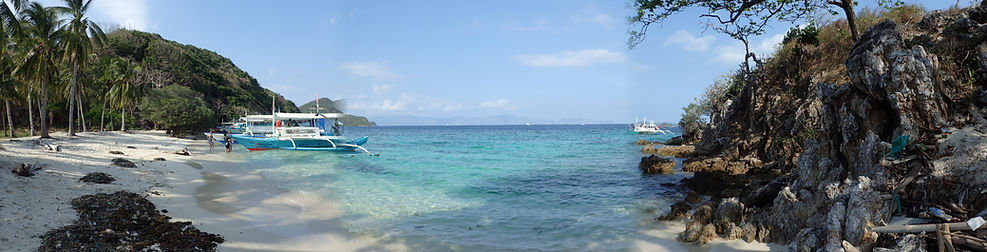
Set within the remote reaches of the Calamianes Islands, Malkapuya Island offers a diving experience that feels untouched, raw, and quietly spectacular. Far from the more frequented routes of Palawan, this isolated site is defined by its clear, open waters, expansive reef systems, and a sense of solitude that is increasingly rare. Beneath the surface, the reefs around Malkapuya reveal a vibrant yet understated ecosystem. Healthy coral formations, scattered reef structures, and pockets of marine life shaped by minimal human pressure and consistent oceanic flow.
What makes Malkapuya compelling is not dramatic topography or high-intensity currents, but its natural balance. Gentle reef slopes transition into sandy bottoms and deeper channels, creating a calm but dynamic environment where reef fish, invertebrates, and occasional pelagic visitors move freely. Visibility is often exceptional, allowing divers to take in the broader structure of the reef while still appreciating the finer details hidden within. It is a place where the pace slows, where observation replaces urgency, and where the reef can be experienced in its more natural rhythm.
For those seeking a quieter, more reflective dive environment, Malkapuya represents a different side of the Calamianes Islands. One that emphasizes space, clarity, and the subtle richness of a reef system allowed to exist with minimal disturbance.


MY MISSION
Malkapuya is part of my current study area in the Calamianes Islands. This include Bayaca, Island T and Culion. These area presents an ideal platform to study how the tourism in this area evolve and its impact on the natural resources, especially its coral reefs. Many images, videos and materials used in the most recent courses and training.
Verde Island Passage
The Verde Island Passage—often called the “center of the center” of global marine biodiversity. Stretches between the southern coast of Luzon and the northern shores of Mindoro. Within this relatively narrow corridor, oceanographic forces converge in remarkable ways. Seasonal monsoons, strong tidal exchanges, and nutrient-rich upwellings continuously flush the reefs, creating conditions that sustain an extraordinary density and diversity of life. Scientists have recorded some of the highest concentrations of reef fish species anywhere on Earth here, alongside a vast array of hard and soft corals, sponges, mollusks, and cryptic invertebrates that form the backbone of a thriving reef ecosystem.

Along the coast of Batangas, this biodiversity becomes immediately tangible. From the reef slopes and dramatic drop-offs of Anilao to the fringing reefs that hug volcanic shorelines, the underwater landscape is shaped by both geology and current. Steep walls transition into coral gardens, sandy patches host rare macro species, and hidden crevices shelter an astonishing variety of life from vibrant nudibranchs and frogfish to schooling jacks and reef predators. The interplay between calm bays and current-swept channels creates a mosaic of microhabitats, each supporting distinct ecological communities.
What makes this region exceptional is not only the number of species present, but the ecological intensity of the system. The reefs are alive with competition, symbiosis, and constant adaptation. Hard corals build the structural framework, while soft corals and filter feeders flourish in current-exposed areas. Reef fish populations exhibit complex behaviors shaped by both abundance and pressure, and even the smallest patches of substrate can reveal new or rare species. This is a place where macro and megafauna coexist within compressed spatial scales, offering a living illustration of how biodiversity thrives when physical conditions, nutrient availability, and habitat complexity align.


Coral diversity in the Verde Island Passage does not reveal itself all at once. It unfolds layer by layer, colony by colony, as if the reef is constantly introducing new forms the longer you stay. At first glance, the abundance is overwhelming: vast fields of branching Acropora reaching toward the light, massive boulder corals anchoring the reef like ancient sentinels, and delicate plating corals stacking outward to capture every available ray of sunlight. But beyond this initial impression lies a far more intricate story. One of structure, competition, and adaptation playing out across an exceptionally compressed space.
What makes this region remarkable is not simply the number of coral species, but how tightly they coexist. On a single reef slope, dozens of coral morphologies compete for space. Branching, encrusting, foliose, submassive each occupying its own niche defined by light, current, and sediment movement. In high-energy zones, robust and flexible corals dominate, their forms shaped by constant water movement. Just meters away, in more sheltered pockets, fragile and highly specialized species thrive, undisturbed and often overlooked.


CORAL REEF
The reefs here are in a constant state of negotiation. Corals grow into one another, wage slow chemical warfare, or adapt their shapes to avoid direct competition. Some extend aggressively, others retreat and consolidate. This dynamic tension is what creates the dense, almost chaotic appearance of the reef but it is also what sustains its resilience. Diversity, in this sense, is not passive abundance; it is active balance.
At a finer scale, the reef becomes even more complex. Between coral branches and beneath overhangs, microhabitats emerge. Each hosting its own community of organisms that depend on the coral structure. Tiny polyps extend to feed in nutrient-rich currents, symbiotic algae drive productivity through photosynthesis, and a multitude of invertebrates find shelter within the living architecture. The reef is not just built by corals; it is continuously shaped by the life it supports.
In the Verde Island Passage, coral diversity is not a statistic. it is an experience of density, interaction, and constant change. It reflects a system where environmental forces, biological competition, and time have converged to produce one of the most intricate reef structures on Earth. Here, every square meter holds a story, and every dive reveals that the limits of diversity have not yet been fully understood.


MARINE LIFE
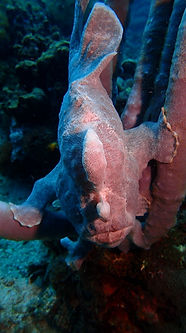
Marine life in the Verde Island Passage moves with a quiet intensity, where every current carries both energy and opportunity, and every surface no matter how small, hosts life. Schools of reef fish shift like living clouds above dense coral formations, while within the reef itself, a hidden world unfolds: cryptic creatures tucked into crevices, symbiotic partnerships playing out in silence, and predators moving with calculated precision. Along the coast of Batangas, this richness becomes immediate and immersive, where macro life like nudibranchs, shrimps, and frogfish shares the same space as larger pelagic visitors drawn by nutrient-rich waters. The ecosystem is in constant motion, shaped by tides and currents that feed, connect, and challenge its inhabitants, creating a balance where survival depends not on dominance, but on adaptation. In this environment, marine life is not isolated into categories of big or small, rare or common. It exists as an interconnected system, where every organism, from the smallest polyp to the largest predator, plays a role in sustaining the rhythm of the reef.



CORAL NURSERY
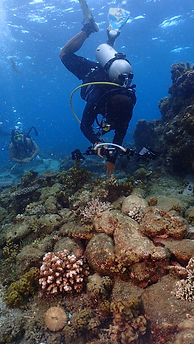
In Pagkilatan, within the biodiverse waters of the Verde Island Passage, two coral nurseries stand not only as restoration sites, but as living classrooms shaped by years of hands-on learning. Developed for educational purposes, these nurseries have played a central role in training countless students from Ocean Quest Global, many of whom completed their programs through direct involvement in the propagation, development, and long-term maintenance of corals. The experience goes beyond technique—it builds an understanding of reef dynamics, patience, and responsibility toward marine ecosystems. Today, the Organic Reef Rehabilitation Center (ORR) continues this legacy, using these same nurseries as practical training grounds where new participants engage directly with living reefs, ensuring that knowledge is not only taught, but experienced, carried forward, and applied with purpose.
For divers, researchers, and conservationists alike, the Verde Island Passage and the Batangas coastline represent more than a destination, they are a benchmark of what a functioning, dynamic reef system can be. It is this combination of accessibility, ecological richness, and scientific significance that has made the region one of the most important marine environments not only in the Philippines, but in the world.
MY MISSION
My arrival in Pagkilatan is not for intervention for a dying ecosystem. The reef in this location did not need any intervention. However, it is in places like this is where learning can take place. By understanding about its ecology people can take steps to prepare themselves for the inherent risk of environmental catastrophe. It is this vision that makes training important at this location. My role is to give this knowledge and skills.


Nestled within the pristine archipelago of the Calamian Islands lies Earth and Ocean Sanctuary (Tampil Island) , a refuge for those burdened by the pressures of modern life, where the healing power of nature restores clarity, balance, and purpose. Surrounded by untouched seas, thriving reefs, and tranquil landscapes, the sanctuary offers an immersive journey of self-discovery, renewal, and environmental consciousness, guided by the belief that healing humanity and healing the planet are inseparable paths.
Earth and Ocean Sanctuary
Earth and Ocean Sanctuary is a transformative initiative dedicated to uniting inner healing with outer stewardship. Founded on the philosophy and principles of Organic Reef Rehabilitation (ORR), this project envisions a sanctuary where education, conservation, and conscious living converge. It is a space for individuals who seek not only environmental engagement, but also personal renewal. A place where soul searching aligns with safeguarding the natural world.
At a time when ecosystems face unprecedented stress and communities face emotional and spiritual disconnection from nature, Earth and Ocean Sanctuary responds with a holistic approach. Guided by ethical and responsible operational parameters, the sanctuary integrates ecological science, regenerative practice, and mindful living. Its foundation draws from the Organic Reef Rehabilitation philosophy, a science-based yet nature-aligned framework that honors natural processes, ecological balance, and long-term resilience over short-term intervention.
The sanctuary will function as both a learning center and a conservation hub. Educational programs will immerse participants in marine and terrestrial ecology, with emphasis on coral reef systems, coastal habitats, and regenerative land practices. Through workshops, field immersion, and guided reflection, participants will gain scientific understanding alongside experiential awareness. Conservation efforts will focus on habitat protection, organic reef rehabilitation principles, biodiversity monitoring, and responsible community engagement.
Earth and Ocean Sanctuary recognizes that environmental preservation is inseparable from human consciousness. True conservation begins when individuals reconnect with the living systems that sustain them. By cultivating ecological literacy, ethical responsibility, and personal mindfulness, the sanctuary aims to inspire a generation of guardians who protect the Earth not from obligation alone, but from deep understanding and reverence.
This project stands as an invitation to heal, to learn, and to serve. Through education and conservation grounded in ORR principles, Earth and Ocean Sanctuary seeks to restore balance both within individuals and within the ecosystems they are called to protect.
WHATS NEW

SEAHORSE CONSERVATION
As part of our expanding conservation initiatives, Earth and Ocean Sanctuary now includes the protection and conservation of seahorses alongside our ongoing efforts in seagrass replanting and coral propagation. These integrated programs reflect our commitment to restoring fragile marine ecosystems through ethical, science-based, and community-driven conservation actions that safeguard biodiversity for future generations.