

The Malaysia is one of Southeast Asia’s most diverse diving destinations, surrounded by rich tropical waters including the South China Sea, the Sulu Sea, and the Celebes Sea. This unique geographical position provides access to an extraordinary range of marine environments, from coral reefs and offshore islands to deep walls, wrecks, seagrass habitats, and highly biodiverse reef systems within the Indo-Pacific region. Malaysia is home to internationally renowned diving destinations such as Sipadan, Mabul, Tioman, Pulau Tengol, and Layang-Layang, attracting divers, marine researchers, underwater photographers, and conservationists from around the world. Its marine ecosystems support remarkable biodiversity and play an important role in regional coral reef conservation, marine education, and sustainable diving tourism.


PERHENTIAN
The name Perhentian means “stopover,” yet this island has always been far more than a place of rest. Long before tourism arrived, these waters carried the pulse of maritime trade between Sulawesi and the Khmer kingdoms. Convoys of Bugis sailors from Makassar crossed the Celebes and South China Seas, navigating uncertain weather, political tensions, and the pirate-infested waters of Siam. Perhentian became their sanctuary — a place to anchor their vessels, replenish supplies, repair sails, exchange stories, and gather strength before continuing their voyage into dangerous seas. The island was not merely a destination, but a lifeline woven into the great maritime history of Southeast Asia.
Today, the trading fleets are gone, replaced by dive boats, resorts, and the rapid rise of tourism. Development now reshapes the shoreline where wooden trading vessels once rested beneath the monsoon skies. Yet beneath the changing surface, Perhentian still carries the echoes of its past. The reefs continue to nurture life, the currents still connect distant civilizations, and the island remains a meeting point between people and the sea.
My work here is different from many other locations. ORR does not conduct coral rehabilitation projects in Perhentian. Instead, our mission is focused on education, cultivating awareness, responsibility, and understanding among those who arrive on these shores. In a place where development advances rapidly, knowledge becomes the first line of conservation. Through education, divers and visitors begin to see the reef not as scenery, but as a living geological ecosystem shaped through centuries of biological growth and natural history.
Perhentian reminds us that conservation is not always about intervention. Sometimes, the greatest contribution is to inspire people to value what still exists before it is lost. Like the sailors who once paused here to prepare for the journey ahead, we too arrive at Perhentian at a crossroads, between exploitation and stewardship, between forgetting and understanding. And perhaps the true purpose of this “stopover” is not simply to rest, but to learn how to move forward with greater respect for the sea that has carried generations before us.

SEAVOICE DIVERS

Among the many dive facilities operating in the Perhentian Islands, Sea Voice Divers stands apart through its unwavering commitment to environmental responsibility and community-driven diving culture. Recognized by ORR for being at the forefront of sustainable awareness, the center has consistently demonstrated that meaningful conservation is not defined by luxury or scale, but by sincerity, dedication, and action. Over the years, numerous ORR training programs have been conducted here, creating a lasting relationship built upon shared values of education, stewardship, and respect for the marine environment.
Sea Voice Divers does not rely on sophistication or grandeur. Its strength lies in its authenticity. The facility operates with a close-knit, family-like approach where divers, instructors, staff, and visitors are welcomed not merely as customers, but as part of a collective journey connected by the sea. In an era where commercialization increasingly shapes the diving industry, Sea Voice Divers preserves the spirit of what diving was always meant to be - personal, meaningful, and deeply rooted in appreciation for the ocean.
Within the waters of Perhentian, where rapid tourism development continues to reshape the islands, establishments like Sea Voice Divers become increasingly important. They serve not only as gateways to the underwater world, but as guardians of the values needed to protect it for future generations.


Environmental Commitment
In the waters surrounding Perhentian, where tourism continues to grow and pressure upon the marine ecosystem increases each year, Sea Voice Divers has remained steadfast in its commitment to protecting the underwater environment. Their dedication goes far beyond operating a dive center. Every dive conducted, every student trained, and every visitor guided into the sea carries a deeper purpose - to cultivate respect, awareness, and responsibility toward the fragile coral reef ecosystems of the islands.
Sea Voice Divers consistently goes the extra mile to ensure the reefs of Perhentian are protected. Whether through responsible diving practices, environmental education, reef awareness initiatives, or direct actions taken to minimize ecological impact, their efforts reflect a genuine passion for conservation rather than obligation. They understand that coral reefs are not simply tourist attractions, but living geological ecosystems that sustain marine biodiversity, coastal stability, and the natural heritage of the islands themselves. This philosophy is embedded into the culture of the center and shared openly with every diver who passes through their doors.
What makes their commitment truly inspiring is the sincerity behind it. In a rapidly commercializing industry, Sea Voice Divers continues to operate with heart, humility, and a family-oriented spirit that values the ocean above profit. Their work proves that meaningful conservation does not always require grand facilities or large-scale operations. Sometimes, the greatest impact comes from a small group of dedicated individuals who choose, every single day, to protect the sea they love. Through their actions, Sea Voice Divers has become more than a dive center, they have become guardians of Perhentian’s underwater world and an example of how grassroots stewardship can shape the future of marine conservation.

Pulau Redang
Off the eastern coast of Malaysia, where the South China Sea deepens into a luminous blue expanse, lies the scattered formation of islands known collectively as Pulau Redang. Though often spoken of as a single destination, Redang is in fact an intimate archipelago of nine islands, namely Pulau Lima, Pulau Paku Kecil, Pulau Paku Besar, Pulau Ekor Tebu, Pulau Pinang, Pulau Ling, Pulau Kerengga Kecil, Pulau Kerengga Besar, and the main island, Pulau Redang itself. Together, they form a fragmented geography of forested hills, granite outcrops, and shallow reef systems that soften the meeting between land and sea.
Each island carries its own subtle character. Some rise steeply from the sea, cloaked in dense tropical forest, while others remain low and quiet, fringed by narrow beaches and coral shelves exposed during the tides. Between them, channels of clear water weave like arteries, moving nutrients, larvae, and life itself. This geography is not accidental. It is the result of ancient geological uplift and erosion, shaped over millennia by monsoon winds and ocean currents that still dictate the rhythm of the islands today.
But Redang’s story is not only geological. It is also human, carried across the sea by one of the most seafaring cultures of the Malay Archipelago, the Bugis. Originating from Makassar in Indonesia, Bugis sailors were renowned navigators, traders, and settlers. From as early as the 17th century, they began moving across maritime Southeast Asia, driven by trade, political upheaval, and an enduring relationship with the sea.

When Bugis seafarers reached the waters off Terengganu, they recognized something familiar in Redang’s geography. The protective arrangement of its islands offered natural harbors, safe anchorage, and proximity to rich fishing grounds. These were not just islands, they were strategic refuges in an otherwise open and sometimes unforgiving sea.
Settlements began as temporary anchorages, evolving gradually into small, enduring communities. The Bugis brought with them not only their maritime skill but also their cultural identity, language, boat-building traditions, and a deep-rooted understanding of ocean navigation. Their vessels, often the iconic phinisi, would have moved between these islands, mapping currents, reefs, and seasonal winds long before modern charts existed. Over generations, the Bugis descendants in Redang became part of the broader Malay cultural fabric while retaining traces of their origin. Their relationship with the sea remained central, not just as a source of livelihood, but as a defining element of identity. Fishing routes, reef knowledge, and seasonal patterns were passed down not through written records, but through lived experience.
Today, while Pulau Redang is widely known for its clear waters and coral reefs, its deeper narrative lies in this intersection of geography and migration. The islands are both a natural formation and a cultural anchorage. A place where landforms shaped human movement, and where seafarers, in turn, gave meaning to the landscape.
In Redang, the sea is not a boundary. It is the thread that connects islands, histories, and people stretching from the shores of Makassar to the reefs of Terengganu, carrying with it a legacy that still quietly endures.



CORAL REEFS
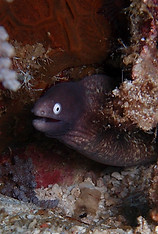
Encircling Pulau Redang is a living reef system shaped by both geology and motion, where fringing reefs cling closely to the island margins, tracing every contour of the coastline like a submerged extension of the land itself. Beyond these reef edges, the seafloor drops into a network of more than twenty dive sites, each defined by subtle shifts in depth, current, and structure. To the north of Pulau Lima rises Big Mount, a deep-water pinnacle that emerges from the blue, its base reaching down to around 30 meters while its upper slopes intersect the more commonly dived range of 18 meters, creating a vertical habitat that attracts pelagic movement and dense reef life. Closer to the main island, near Tanjung Mak Chantik, the smaller Mini Mount forms a shallow-water counterpart, less dramatic in scale but equally alive, with reef organisms thriving in the sunlit zone. What defines Redang’s underwater landscape, however, is not only its structure but its constant motion; the islands sit exposed to daily tidal currents that sweep across channels and reef fronts, feeding the ecosystem while demanding respect from those who enter it. Diving here is never static, It is timed, read, and understood in relation to the tides, where each descent becomes part of a larger rhythm governed by the sea itself.


CONSERVATION
Gazetted as part of the Redang Marine Park, Pulau Redang represents one of the most significant marine conservation zones on the east coast of Malaysia. Established to protect its extensive coral reef systems and associated marine life, the marine park designation restricts extractive activities such as fishing and coral collection within a defined radius of the islands. This protection has allowed reef ecosystems to remain relatively intact, with high coral cover, abundant reef fish populations, and critical habitats for species such as sea turtles that nest along its beaches. The fringing reefs, clear waters, and dynamic currents have made Redang not only a conservation priority but also a natural classroom for marine education and reef rehabilitation efforts.
Development in Redang, however, has followed a careful but evolving balance between conservation and tourism. Since the 1990s, the island has grown into a premier marine tourism destination, with resorts, dive operators, and supporting infrastructure concentrated primarily along Pasir Panjang (Long Beach) and Teluk Dalam. These developments have brought economic opportunity to local communities, many of whom are descendants of early seafaring settlers, but have also introduced pressures on waste management, coastal integrity, and reef health. As a result, management within the marine park framework has increasingly emphasized sustainable practices: regulated visitor numbers, mooring buoy systems to prevent anchor damage, reef awareness programs, and seasonal closures during the monsoon period to allow ecological recovery. Redang today stands as a working example of a living marine park where protection is not absolute isolation, but an ongoing negotiation between human presence and the resilience of the reef systems it depends on.
MASS TOURISM
There is a quiet irony in the success of Pulau Redang as a marine park: the very beauty that drew protection has also drawn pressure. Mass tourism arrives not as a single force, but as an accumulation. Boats cutting daily across the channels, footsteps compacting once-soft beaches, sunscreen and sediment drifting invisibly into the shallows. Along the fringing reefs, where corals exist in a delicate balance of light, temperature, and water chemistry, even small disruptions compound over time. Unregulated snorkeling, careless fin kicks, and anchor drops can fracture decades of coral growth in seconds, while increased coastal development alters natural runoff, carrying nutrients that shift reef systems toward algal dominance. Waste, both seen and unseen, becomes part of the tide, testing the limits of an ecosystem already shaped by currents and seasonality.
What makes this pressure more complex is that it is not driven by malice, but by demand, by the desire to experience a place that feels untouched. Yet without restraint, that desire becomes extractive in its own way. The rhythms of the island begin to change: wildlife retreats from constant disturbance, turtle nesting grounds face encroachment, and the clarity of the water that once a defining feature can no longer be taken for granted. In this tension between access and preservation, Redang stands at a threshold. The threat of mass tourism is not simply degradation; it is the gradual erosion of the very conditions that make the islands meaningful. What remains will depend on whether visitation can align with the limits of the reef, or whether the pace of human presence continues to outstrip the capacity of the ecosystem to recover.

Pulau Bidong
South of Pulau Redang lies a quieter, lesser-known cluster of islands: Pulau Bidong and its surrounding outliers: Pulau Gelok, Pulau Karah, Pulau Yu Kecil, Pulau Yu Besar, and the stark rock formation of Batu Tengkorak. Unlike the vibrant tourism of Redang, this small archipelago carries a more layered identity, shaped as much by human history as by the natural rhythms of the sea.
Pulau Bidong itself, the largest of the group, holds a past that still lingers in its overgrown trails and weathered remains. In the 1970s, during the upheaval following the Vietnam War, the island became one of Southeast Asia’s most significant refugee camps. Thousands of Vietnamese “boat people” arrived on its shores, fleeing conflict and uncertainty, turning what was once an isolated island into a densely populated, makeshift settlement almost overnight. At its peak, the island held tens of thousands of refugees, its hillsides transformed into a patchwork of shelters, pathways, and communal spaces carved out of necessity. Even today, remnants of that period. Crumbling structures, old jetties, fragments of signage remain quietly embedded in the landscape, giving the island an atmosphere that is both reflective and deeply human.
As the tides of history shifted and the refugee crisis subsided, Pulau Bidong gradually returned to stillness. Nature began reclaiming what had once been occupied, softening the edges of human presence with dense vegetation and coastal growth. In more recent years, part of the island has found a new role, not as a place of refuge, but as a place of learning. A research station established by Universiti Malaysia Terengganu now operates on the island, drawing scientists, students, and conservationists to study its surrounding marine ecosystems and coastal environments.
This transition from refuge to research ground feels almost symbolic. The same waters that once carried people seeking safety are now the subject of study and preservation. Coral reefs, seagrass beds, and marine life around the Bidong islands are quietly thriving, relatively undisturbed by mass tourism. The isolation that once made the islands suitable as a refugee camp now lends itself to scientific observation and ecological recovery.
The smaller surrounding islands Pulau Yu Besar and Yu Kecil with their rugged shorelines, Pulau Karah and Gelok with their dense vegetation, and Batu Tengkorak standing like a solitary sentinel remain largely untouched. Together, they form a secluded marine landscape where history and nature coexist without spectacle.
Pulau Bidong is not a place that announces itself loudly. It is felt more than seen a place where the past lingers in silence, and where the present is defined by quiet study and gradual renewal. In contrast to the lively reefs of Redang, Bidong offers something more introspective: a reminder that even the most remote islands can carry stories that stretch far beyond their shores.


MY RESEARCH LOCATION
There is nothing about Pulau Gelok that suggests global influence. It is a small, uninhabited outcrop in the shadow of Pulau Bidong. A quiet, exposed, and easily overlooked. Yet between 1995 and 2018, this remote island became the proving ground for an idea that would eventually travel far beyond its shores.
This was where the Ocean Quest Global coral propagation system began. Not in a laboratory, not within the framework of institutional funding, but in the raw, unfiltered conditions of the open sea. The reefs around Pulau Gelok were not curated environments; they were dynamic, sometimes unforgiving systems shaped by currents, temperature shifts, and natural disturbances. It was precisely this unpredictability that made the site invaluable. Every fragment placed, every bond tested, every failure observed fed directly into the evolution of a method that had to work with nature, not against it.
What emerged over years of persistence was a fully organic propagation approach. One that rejected artificial substrates and long-term mechanical intervention. Instead, it relied on a temporary bonding system that allowed coral fragments to stabilize just long enough for natural calcification to take over. The philosophy was simple but demanding: if the reef could not sustain itself without ongoing interference, then the method was flawed. Pulau Gelok became the filter through which only the most resilient ideas survived.
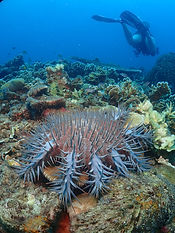
Alongside this work unfolded a second, quieter study. One that required even greater discipline: the long-term, non-intervention observation of the Crown-of-thorns starfish. Widely regarded as a destructive force on coral reefs, this species has often been met with immediate removal or culling wherever it appears. But here, at Pulau Gelok, the decision was made to do nothing. Instead, to watch, to record, and to understand.
This restraint revealed patterns rarely documented. Feeding behavior, movement across reef structures, population fluctuations, and interactions with recovering coral systems were observed without human interference altering the outcome. Over time, the starfish shifted from being seen purely as a threat to being recognized as part of a larger ecological rhythm, capable of both damage and balance, depending on the conditions of the reef it inhabits.
These two lines of research, one actively rebuilding coral systems, the other deliberately stepping back, created a powerful tension. Together, they formed a more complete understanding of reef dynamics: restoration is not just about growth, but about context. A reef is not a static structure to be repaired; it is a living system defined by relationships, pressures, and cycles.
What makes Pulau Gelok remarkable is not just what was achieved there, but how it was achieved. No infrastructure, no audience, no immediate recognition. Only time, consistency, and an unwavering commitment to let the reef dictate the terms. From this isolated island, a methodology now used around the world took shape, grounded in the idea that true restoration must ultimately disappear into the natural process it seeks to support. Pulau Gelok remains as it was. A quiet, unassuming, and largely untouched. But beneath its waters lies a legacy that extends far beyond its size: a reminder that meaningful innovation in conservation does not always begin in prominence. Sometimes, it begins in places where no one is looking, and endures because it was built to belong.



Beyond the Outbreak: What Remote Reefs Reveal About Acanthaster
My research on the Crown-of-thorns starfish, conducted over more than two decades at Pulau Gelok in the Pulau Bidong archipelago, is grounded in a rare commitment to long-term, non-intervention observation. Rather than treating the species as an immediate threat requiring control, I focused on documenting its natural behavior, movement patterns, feeding dynamics, and population fluctuations within an undisturbed reef system. This approach allowed me to observe Acanthaster as part of a functioning ecological network, revealing that its impact is closely tied to the condition of the reef itself. In healthy, structurally complex environments with intact predator presence and stable nutrient conditions, the starfish does not exhibit the destructive outbreak patterns commonly reported in managed or human-impacted reefs. These findings suggest that Acanthaster is less a primary driver of reef degradation and more an indicator of ecological imbalance, reframing its role from a target of intervention to a species that reflects the underlying health and resilience of coral reef systems. For more information on this topic please go to my blog or conservation page.