

NUDIBRANCH DIVERSITY
The Vastness of a Living Reef
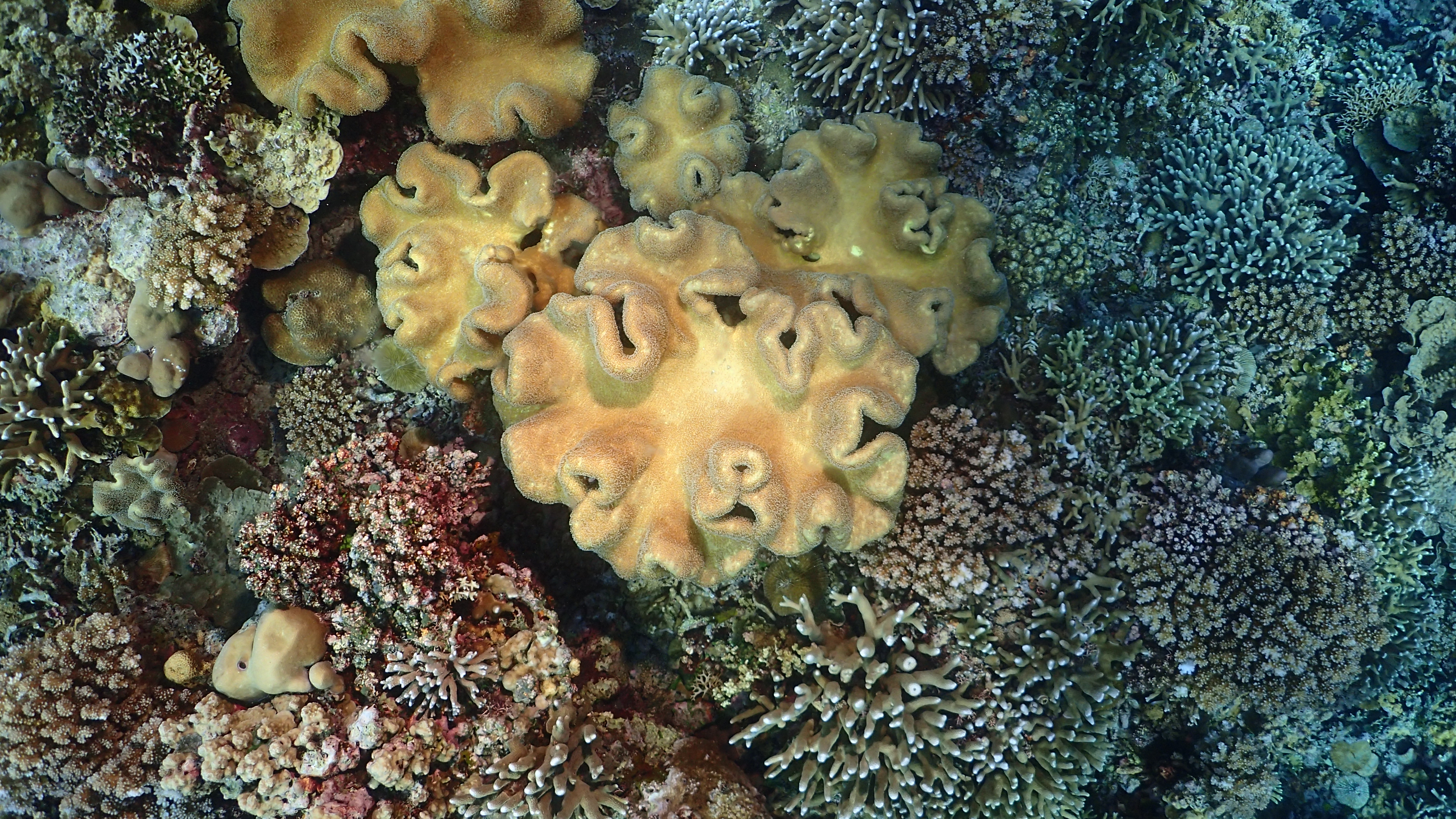
A coral reef is far greater than the landscape we see beneath the water. Its magnitude extends beyond the branching colonies, towering formations, colourful fishes, and sunlit gardens that first capture our attention. Within and around this visible world lies another, woven through crevices, beneath ledges, across sediment, and over the surfaces of living organisms. Here, countless relationships unfold at scales that often escape our notice. To begin understanding a reef, we must learn to look beyond its appearance and recognise the extraordinary depth of life that sustains it.
The vastness of a reef is therefore measured in more than distance, area, or depth. It is also measured in the number of relationships it holds. A single coral formation provides surfaces, shelter, feeding grounds, and opportunities for reproduction. Each organism occupying that formation has its own requirements and interactions. Across an entire reef, these connections form intricate food webs and networks of dependence, linking its inhabitants to one another and to the surrounding ocean.
What appears to be a quiet underwater scene is a place of continuous activity. Organisms feed, grow, compete, reproduce, and respond to changing conditions. Some interactions unfold openly; others occur beneath a thin layer of sediment, inside a sheltered cavity, or during the hours of darkness. The reef we observe during a dive is only a brief encounter with a much larger living process.
Our attention naturally follows the most conspicuous inhabitants. Reef-building corals establish the architecture around which much of this community develops. Their structures provide the foundation for an extraordinary concentration of marine life. Yet the significance of that architecture becomes clearer when we consider the organisms occupying its smallest spaces and the relationships connecting them.
Visibility is a poor measure of ecological importance.
A small organism may participate in processes that are essential within its immediate habitat, even when its influence cannot be seen across the wider reef. The contribution of these less conspicuous inhabitants deserves the same seriousness of attention that we give to the visible ecological drivers. Their functions differ in scale and magnitude, but overlooking them leaves our understanding incomplete. A reef cannot be understood fully through its largest structures or most recognisable animals alone.
Among these often overlooked inhabitants are the nudibranchs.
For many observers, the first encounter with a nudibranch is an encounter with beauty. A vivid body emerges against a muted background. Delicate projections move with the water. Patterns and colours seem almost improbable in their complexity. Their appearance invites photography, admiration, and the search for a name. These are valuable beginnings, but they open only the first door.
Beyond that door lies an animal engaged in the daily workings of its habitat.
Nudibranchs are predators, and their diversity includes remarkable differences in diet. Depending on the species, they may feed on sponges, hydroids, bryozoans, corals, anemones, or other animal prey. Understanding this dietary diversity changes how we view them: each encounter becomes an opportunity to investigate a relationship between a predator, its food, and the habitat supporting both.
A nudibranch moving across a sponge invites us to consider more than its identity. Is it feeding, searching, or simply crossing the surface? What evidence distinguishes these possibilities? Is the sponge abundant nearby, or confined to a particular sheltered space? Does the nudibranch occur repeatedly in the same habitat? Such questions transform a sighting into an ecological observation.
They also teach us restraint. Presence alone does not establish feeding, and feeding alone does not establish an effect on the wider reef. The influence of a predator depends on its abundance, its prey, the frequency of its feeding, and the conditions in which these interactions occur. Careful observation allows us to recognise ecological contributions without assigning every animal a role larger than the evidence supports.
This distinction matters because the reef is a changing system. Its inhabitants do not maintain a fixed arrangement. Their relationships develop through growth, recruitment, predation, competition, and disturbance. Understanding nudibranch ecology requires us to follow these relationships over time, rather than treating a single photograph as a complete account of an animal’s life.
The reef also contains many different environments within a seemingly continuous landscape. Exposed surfaces and shaded recesses offer different conditions. A sheltered lagoon presents a different setting from a reef slope swept by currents. Sand, rubble, living colonies, and encrusting communities create further differences at a much smaller scale. For the observer, this variety is an invitation to broaden the search.
We must learn to look where the reef is less immediately spectacular.
The underside of a ledge, the edge of an encrusting colony, or a small patch between larger organisms may hold relationships as compelling as those unfolding above a coral garden. Looking closely requires patience. It asks us to slow our movement, adjust our perspective, and allow unfamiliar forms to become recognisable. An apparently empty surface may reveal a living community once we understand what to seek.
This is one of the greatest educational values of nudibranchs: they encourage us to reconsider the scale at which we observe the ocean. Their small bodies draw our attention into the details of habitat. Their diversity leads us toward questions about food, shelter, behaviour, and distribution. Through them, the reef becomes more intricate, and our understanding becomes more attentive.
They also remind us that biodiversity encompasses relationships as well as species. A name is an essential part of documenting an organism, but ecological understanding asks further questions. What sustains it? Where does it occur? How does it behave? What changes when its habitat changes? Each answer places the animal more clearly within the living reef.
For conservation, this wider perspective is fundamental. Protecting the reef means protecting the conditions and habitats through which its many inhabitants persist. An organism cannot be considered independently of the food and environment supporting it. The less visible members of the community belong within our assessments, our observations, and our decisions about rehabilitation.
Nudibranch Diversity and Reef Ecology begins with this invitation: to enter the reef with curiosity, to appreciate its beauty, and to look patiently into the relationships beneath that beauty. The pages that follow approach nudibranchs as living participants in an immense ecological system, each deserving careful study within the context of its habitat.
There is pleasure in discovering a creature we have never seen before. There is deeper understanding in discovering how it lives. As we learn to recognise these small inhabitants, the reef expands before us. Familiar places reveal unfamiliar lives. Quiet surfaces become scenes of activity. A single sighting leads outward into questions about an entire community. Through this process, we begin to appreciate the magnitude of the coral reef ecosystem—not only through the grandeur of its visible structures, but through the countless connections that make those structures a living world.